
Luang Prabang Food Market: A Culinary Journey
Discover Luang Prabang food market, exploring local dishes, vibrant flavors, and must-visit food spots in this enchanting Laotian city.
On this page
Luang Prabang, a UNESCO World Heritage site in Laos, is renowned for its picturesque landscapes and rich cultural heritage, which is equally reflected in its vibrant food scene. The Luang Prabang food market is a bustling hub where local chefs and vendors showcase an array of traditional Laotian dishes and unique culinary experiences. Here, you can savor everything from fragrant sticky rice to zesty papaya salad, immersing yourself in the flavors that define this beautiful city. With a variety of regional specialties and delightful street food options, experiencing the Luang Prabang food market is a must for every food lover.
Key Takeaways
- The Luang Prabang food market offers a rich variety of authentic Laotian flavors.
- Signature dishes like khao niew and papaya salad exemplify the local cuisine.
- street food and market stalls provide budget-friendly yet delicious dining options.
- Hands-on cooking classes are an excellent way to learn more about Lao culinary traditions.
1. traditional Laotian Breakfast: Khao Niew and More
In Luang Prabang, breakfast is a vibrant reflection of Laotian culture. One cannot miss Khao Niew, or sticky rice, which is considered the staple breakfast food across Laos. Traditionally, Khao Niew is served with a variety of accompaniments such as laab, a minced meat salad with herbs, and jeow, a spicy dipping sauce made from roasted chili and eggplant. This combination creates a flavorful start to your day.
Moreover, many locals enjoy pairing their sticky rice with grilled meats, often found at morning markets. Thus, the true charm of a Laotian breakfast lies in its simplicity and freshness. Don’t forget to try delicious Paté and French bread, a leftover from colonial times, served with various spreads.
Pro Tip: Make sure to arrive early at the markets to experience the bustling energy and get the freshest offerings!
Where to eat: For a genuine experience, visit the local food stalls at the Luang Prabang Morning Market or grab breakfast at Utopia, where you’ll find a fusion of traditional and modern options.
2. Discovering Spicy Papaya Salad in Luang Prabang
One of the most popular dishes in Luang Prabang is the Spicy Papaya Salad, known as Tam Mak Hoong. Made from shredded green papaya, this vibrant salad is a delightful mix of flavors: spicy, sour, and sweet. The dish is prepared using a mortar and pestle, which blends the ingredients together. Peppers, lime juice, fish sauce, and sometimes shrimp or peanuts are added for an extra kick!
This colorful salad is often enjoyed as a side dish but is also a perfect refresher on hot days. Additionally, you’ll find variants that incorporate local ingredients, making each version unique to the vendor. The combination of textures and flavors makes it an essential dish to try when you explore the Luang Prabang food market.
Did you know? For a milder version, simply ask for less chili, allowing you to fully savor the fresh papaya!
Where to eat: Head over to Phousi Market to taste authentic papaya salad or visit local restaurants like Restaurant Khaiphaen that provide a great version of this local favorite.
3. Savory Lao Curries: A Must-Try Experience
🌟 Local Expert Tip: Get the most out of your Luang Prabang visit with guided tours!
Another culinary gem in Luang Prabang is the scrumptious Lao curries. Unlike typical curries found in neighboring countries, Lao curries are distinguished by their unique use of fresh herbs and spices. Gaeng Nor Mai, a bamboo shoot curry, and Gaeng Pha, which consists of various vegetables and meats, are among the most popular choices. The richness of coconut milk makes these dishes both savory and satisfying.
Moreover, Lao curries can be quite mild, allowing the natural flavors of the ingredients to shine. Often served alongside sticky rice, you will find them at both local eateries and high-end restaurants. This versatility means that every meal can be a new experience.
Pro Tip: Pair your curry with grilled meats for a complete Lao feast!
Where to eat: For an authentic taste, visit Chez Maman or Le Silapa Restaurant, which both serve delicious incarnations of these aromatic curries.
4. Exploring the Varieties of Sticky Rice
🌟 Local Expert Tip: Get the most out of your Luang Prabang visit with guided tours!
Sticky rice, known as khao niew, is a staple in Laotian cuisine and particularly significant in Luang Prabang. This unique type of rice has a glutinous texture when cooked, making it perfect for pairings with various dishes. Traditionally, sticky rice is served with meals, where it compliments flavors and adds a pleasant chewiness.
In Luang Prabang, you can find different varieties of sticky rice, including white, purple, and even black sticky rice. Black sticky rice is often used in desserts, providing a sweet and nutty flavor that’s delightful. Transitioning from savory to sweet, sticky rice can be enjoyed in a variety of ways—wrapped in banana leaves or even mixed with coconut milk for an indulgent treat.
Did you know? Sticky rice is not only delicious but also plays a crucial role in Laotian cultural ceremonies and celebrations.
When in Luang Prabang, be sure to try it at local eateries or markets. It’s often served alongside grilled meats or vibrant salads. Make it a part of your gastronomic journey!
5. Luang Prabang street food: A Gastronomic Adventure
The Luang Prabang food market is a vibrant hub of culinary diversity. street food in this UNESCO World Heritage city offers a unique glimpse into the daily life and culture of its people. Walking through the bustling streets, you’ll be greeted by tempting aromas wafting from various stalls.
Popular street food items include Bun Khao, a flavorful noodle dish topped with fresh herbs and savory meats. Additionally, don’t miss jungle curry sold by local vendors. The convenience and affordability of street food make it a favorite among both locals and tourists alike.
As you explore, keep an eye out for fried rice cakes called “khao pies” and delectable spring rolls that capture the essence of Lao cuisine. Transitioning from food to culture, each bite is an adventure waiting to be tasted!
Pro Tip: Always observe where locals are dining, as it’s often a sign of delicious food.
Where to eat: Head to the street stalls near the Night Market for a variety of options.
6. The Art of Making Luang Prabang Sweets
In Luang Prabang, indulging in local sweets is a delightful experience. The art of making Luang Prabang sweets is deeply embedded in the culture. These desserts are often made from natural ingredients such as rice, coconut, and tropical fruits, embodying the flavors of Laos.
One popular sweet is kao tom, a rice dumpling filled with coconut and sugar, often wrapped in banana leaves before being steamed. Additionally, sweets made from fresh fruit, like mango and banana, are common and provide a refreshing end to a meal. Transitioning towards sugary delights, these treats offer both a texture contrast and unique flavors.
Did you know? Many Luang Prabang sweets are made using traditional techniques passed down through generations.
To truly appreciate these desserts, visit local dessert shops or markets where they are made fresh daily. Taste a little piece of Lao history with each bite!
7. Visiting the Night Market for Culinary Delights
The Luang Prabang food market is a vibrant culinary hub that comes alive at night, offering a treasure trove of delicious delicacies. Here, you can explore a variety of mouthwatering local dishes, all under the warm glow of market lights. The night market is not only an excellent place to enjoy a meal, but it also provides an authentic experience of Laotian culture.
As you wander through the stalls, you can find everything from Lao-style barbecued meats to traditional desserts. A must-try is the Larb, a spicy minced meat salad that perfectly combines flavors and aromas. Additionally, don’t miss out on sampling the exquisite sticky rice, which pairs beautifully with many local dishes.
Pro Tip: Arrive early to secure the best seats and enjoy freshly grilled treats!
For dessert lovers, the stalls offer a selection of sweet treats like khao nom, sticky rice cakes topped with coconut milk. Overall, the lively atmosphere and the incredible variety of food make the night market a foodie’s paradise.
8. Tantalizing Lao Grilled Meats and Skewers
🌟 Local Expert Tip: Get the most out of your Luang Prabang visit with guided tours!
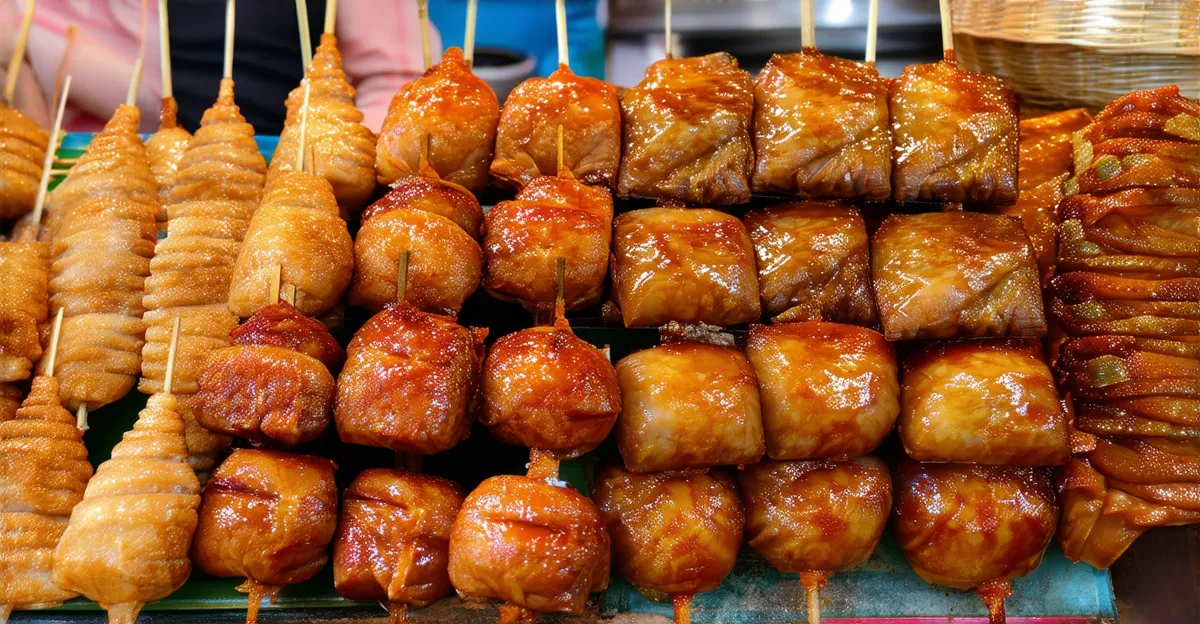
Lao grilled meats and skewers are an absolute highlight of the Luang Prabang food market. These dishes are infused with local herbs and spices, delivering an unforgettable flavor that represents Lao cuisine. Visitors can expect to find various skewers made from marinated chicken, pork, and beef, expertly grilled over an open flame.
One popular option is ping pa, or grilled fish, which is often wrapped in banana leaves to retain moisture and flavor. The aroma of the grilling meat fills the air, tempting passersby to stop and feast. While savoring your grilled meats, be sure to try the accompanying dipping sauces like nam prik, a spicy chili sauce that adds a delightful kick to each bite.
Did you know? Lao grilled meats are often served with a side of sticky rice, which complements the smoky flavors perfectly.
Where to eat: For the best grilled meats, head to food stalls 12-14 located at the north end of the night market. These stalls are renowned for their succulent skewers and friendly service.
9. Herbal Teas and Traditional Drinks from Laos
When exploring the Luang Prabang food market, don’t forget to sip on some traditional Lao beverages.
Laos is known for its diverse range of herbal teas and drinks that not only quench your thirst but also offer health benefits. One popular drink is jasmine tea, known for its fragrant aroma and soothing properties.
Another delightful option is latte Lao, a sweet coffee made with local coffee beans, served hot or iced. Bamboo juice, a unique drink made from pressed bamboo stalks, is a must-try for those looking for a refreshing taste of Laos.
Pro Tip: Adding a touch of honey to your herbal tea can enhance the flavor and sweetness.
Lastly, don’t miss out on tasting natural fruit juices often made from fresh and local ingredients. These beverages not only taste great but also provide a refreshing break from the delicious savory foods of the market.
10. The Unique Flavors of Lao Cuisine
Lao cuisine is a delightful tapestry of flavors that reflects the country’s rich culture and natural bounty. When exploring the Luang Prabang food market, you will discover dishes that emphasize freshness and locality. One signature element is the use of sticky rice, which is often served at every meal and is a staple in Laotian households.
Another hallmark of Lao cuisine is the balance between sweet, sour, salty, and spicy elements. Dishes often include aromatic ingredients such as lemongrass, galangal, and various fresh herbs, which contribute to the vibrant taste. For instance, larb, a traditional minced meat salad, showcases this balance with its zesty lime dressing and minty freshness.
Did you know? Lao cuisine is known for its health benefits, as many dishes are made with fresh, natural ingredients without excessive oil or heavy seasoning.
Where to eat: To experience authentic Lao flavors, visit Restaurant Apsara. Their dishes reflect the essence of Luang Prabang’s culinary heritage. Another great destination is Le Banneton Café, which offers a blend of traditional and contemporary Lao cuisine.
Luang Prabang food market is a culinary treasure trove waiting to be explored. With its rich flavors, colorful dishes, and vibrant atmosphere, visitors can truly savor the essence of Laotian cuisine. Don’t miss the opportunity to experience this delectable journey – share your favorite dishes or plan your visit to the market today!
Frequently Asked Questions
A: Luang Prabang food is known for its use of fresh herbs, spices, and local ingredients, making each dish flavorful and aromatic.
A: Must-try dishes include khao niew (sticky rice), larb (minced meat salad), and spicy papaya salad.
A: Yes, many stalls offer vegan-friendly dishes featuring fresh vegetables and local ingredients.
A: The best time to visit is during the evening when the night market opens, showcasing a variety of food options.
A: Yes, there are several guided food tours available that offer a deeper insight into the local culinary scene.
A: Be sure to try traditional Lao herbal teas and sugarcane juice for a refreshing beverage experience.